Scenes Volume III
Plate XXII
Silence, in layers
Maun · silence; a stillness kept on purpose
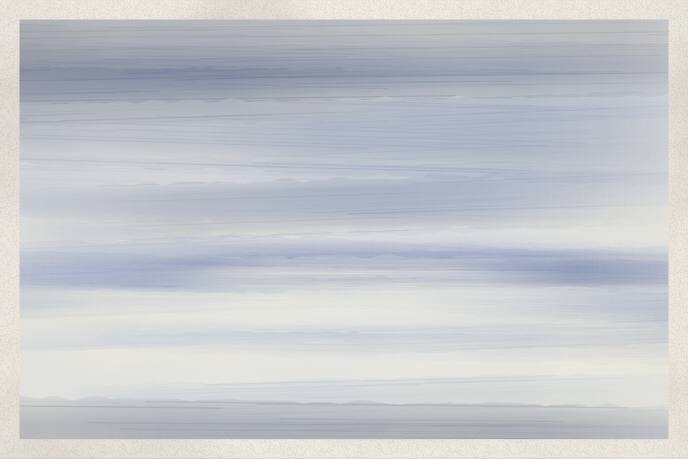
A painting that makes itself and then stops. A warm ground goes down first, then thin veils of colour are rolled across it, some pressed hard and some barely touching, and others are scraped back so the ground glows through. Once the last pass is down, nothing moves except a slow breath of light. Every seed is a different painting in one of four palettes: turmeric, monsoon, kokum and indigo on lime. A quiet background for words, and a cover for a document.
After V. S. Gaitonde. Taken: silence as a working method: layers of translucent colour, scraped back, with the light coming from underneath. Left: his paintings, his forms and his marks; this is a process, not a picture of his.
A way of working after V. S. Gaitonde, not a copy of his pictures. The palette names come from Goan colours: turmeric, the monsoon, kokum, and indigo on a lime-washed wall.
The prompt
the prompt
Make a generative colour-field painting in plain JavaScript that builds itself on a canvas and then goes still. Keep two offscreen canvases: a luminous ground (a warm glow with soft mottling) and a paint layer above it. From a seed, plan about forty passes, each either a roll (a broad, nearly horizontal band of thin, translucent paint with ragged ends and streaks along the roller’s direction) or a scrape (the same kind of band, erased out of the paint layer with destination-out so the ground glows through). Choose one restrained palette per seed. Apply one pass per frame so you can watch the painting accumulate. When the last pass is down, stop adding anything and let only a very slow, soft breath of light drift across the surface, and keep that breath away from any words laid over the painting. Give it three registers: quiet shows only the finished painting, warm lets it make itself and then breathe, and playful lets a click or the Enter key scrape a band back where the hand is.
How the words become code
- two offscreen canvases: a luminous ground … and a paint layer above it
- paper and grainKeeping the ground apart from the paint means scraping can reveal real light instead of an empty hole. The ground is painted once; the paint layer only ever gets added to or taken from.
- erased out of the paint layer with destination-out
- paper and graindestination-out removes what is already there wherever you draw, in proportion to how opaque you draw it. A thin scrape leaves a ghost of the paint; a hard one goes back to the glow.
- From a seed, plan about forty passes
- seedsEvery pass is decided up front from the seed: thirty passes over a denser zone, two darker edges and two last scrapes, 34 in all. So a seed is a painting, and replay makes exactly the same one. The finished still lays them down six a frame, so no frame stalls.
- streaks along the roller’s direction
- smooth noiseInside each band, hairline streaks follow the roller, their opacity set by smooth noise so the paint looks dragged rather than printed. On a slow machine the governor keeps fewer of them.
- one restrained palette per seed
- perceptual colourEach palette is a glow and three or four paints close in hue, so the painting stays one quiet colour with depth in it rather than many colours competing. The palette attribute chooses one by name.
- keep that breath away from any words laid over the painting
- calm zonesThe page reports where its text sits. Under those boxes, and 24 units round them, the painting is drawn again without the breath, so the words sit on paint that does not move.
More of it
npx susegad add scene-maun